Why Your Business Needs a Cloud Migration Strategy Before Moving a Single Workload
Written by : Team Accveil

Moving to the cloud is no longer a matter of ‘if’ but ‘when’, yet the rush to modernise often leads to a ready, fire, aim approach that costs enterprises millions. According to a disturbing industry trend, as of 2026 figures, nearly 74% of organisations are still failing to see the returns on investment even after initial migration, mainly due to budget blowouts and unforeseen technical problems. This statistic brings home a harsh reality for IT leadership: the success of your digital transformation isn’t determined by the day you go live, but by the months of preparation that precede it. Developing a comprehensive cloud migration strategy is the only way to ensure your move is an evolution rather than a disruption.
What is a Cloud Migration Strategy?
A cloud migration strategy is a structured plan that outlines how an organisation will move its applications, data, and workloads from on-premise infrastructure or legacy systems to a cloud environment. It defines the migration approach, identifies workload priorities, evaluates dependencies, and sets timelines for execution.
The strategy also includes security, governance, and cost management considerations to ensure cloud adoption aligns with business goals. By establishing clear guidelines, organisations can manage complexity and execute migration in a controlled and efficient manner.
Why Enterprises Struggle Without a Strategy
Many organisations begin their cloud journey with the assumption that migrating infrastructure will automatically improve efficiency and scalability. While cloud platforms provide powerful capabilities, enterprise IT environments are rarely simple enough for migration to be straightforward.
Large organisations often operate complex application ecosystems where multiple services, databases, and internal tools interact with one another. Migrating these systems without understanding their dependencies can lead to unexpected disruptions.
One of the most common issues occurs when companies replicate their existing infrastructure in the cloud without redesigning applications for cloud environments. This approach, often called lift-and-shift migration, may move workloads quickly but frequently results in inefficient architectures that increase long-term costs.
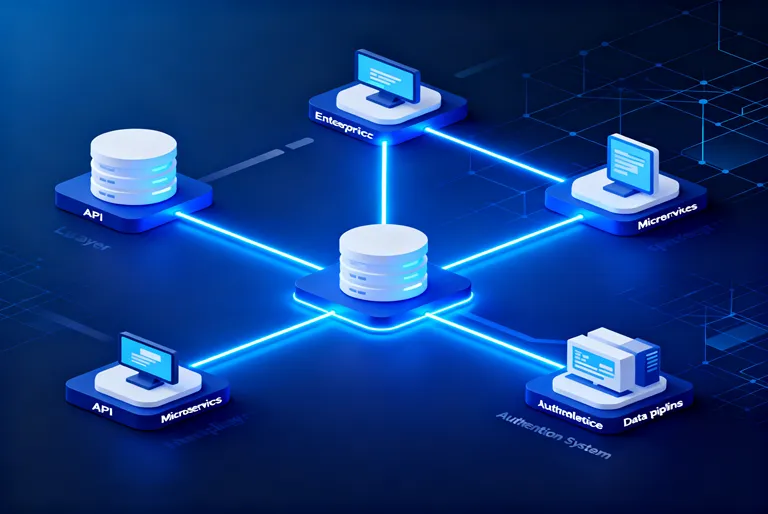
Another challenge arises from insufficient visibility into application dependencies. Enterprise workloads are rarely isolated. A single application may rely on several backend services, data pipelines, or authentication systems. If these dependencies are not mapped before migration, transferring one system can affect others.
This is where structured cloud migration planning becomes essential. By analysing application architecture and infrastructure dependencies early, organisations can avoid unexpected disruptions and ensure migration occurs in a controlled and predictable manner. Many firms further de-risk this stage by utilising managed services to provide real-time monitoring and observability across these intricate dependencies, ensuring no service is left behind.
Key Benefits of Developing a Cloud Migration Strategy
A clearly defined cloud migration strategy allows enterprises to approach cloud adoption with greater control and predictability. The primary advantages include the following:
1. Improved workload prioritisation:A strategic approach helps organisations identify which workloads should migrate first based on business importance, technical complexity, and operational risk. Less complex applications may be moved earlier to establish migration processes before handling critical systems. A core part of this prioritisation is deciding which cloud platform each workload is best suited for working through an AWS vs Azure migration strategy at this stage ensures that workload placement decisions are made deliberately rather than defaulting to a single provider without evaluation.
2. Better cost management: Cloud services provide flexible pricing models, but without proper planning organisations may over-provision resources or select inefficient service configurations. A structured strategy enables accurate cost estimation and resource allocation.
3. Stronger security frameworks:Cloud adoption introduces new security responsibilities, including identity management, encryption policies, and monitoring systems. Establishing these controls before migration helps protect sensitive enterprise data. Teams that want a detailed view of where security risks concentrate during the transition should review cloud migration security for hybrid workloads, which covers the specific vulnerability windows that open as workloads move between on-premise and cloud environments.
4. Reduced operational disruption: A migration strategy enables phased transitions rather than large-scale infrastructure moves. This phased approach reduces the risk of downtime and allows IT teams to monitor system performance during each stage.
5. Clear governance and accountability: Cloud adoption often involves multiple teams across infrastructure, development, and security functions. A strategy provides governance guidelines that clarify roles and responsibilities throughout the migration process.
Before migrating workloads, organisations must evaluate whether their infrastructure, applications, and teams are prepared for cloud environments. This evaluation process is known as a cloud readiness assessment, and it helps identify potential technical, operational, and security challenges before migration begins. For elaborate transformations, many enterprises seek assistance from consulting & advisory facilities at this stage to provide a neutral, data-driven audit of their current architecture.
The key aspects evaluated during this process include the following:
- Analyse application architecture to determine whether legacy systems require modification or modernisation before being moved to the cloud.
- Review infrastructure components such as servers, storage systems, and network configurations to ensure workloads can function efficiently in cloud environments, especially as over 70% of enterprise workloads now operate in cloud platforms.
- Map application dependencies and integrations, since enterprise platforms often rely on multiple databases, APIs, and internal services that must remain connected after migration.
- Evaluate data governance, compliance requirements, and security policies before transferring sensitive business information.
- Examine internal IT capabilities, as cloud infrastructure requires expertise in automation, monitoring tools, and resource optimisation practices.
- Identify potential cost management challenges early, since studies show 94% of IT decision-makers struggle with controlling cloud costs without structured planning frameworks.
Building a Cloud Migration Roadmap
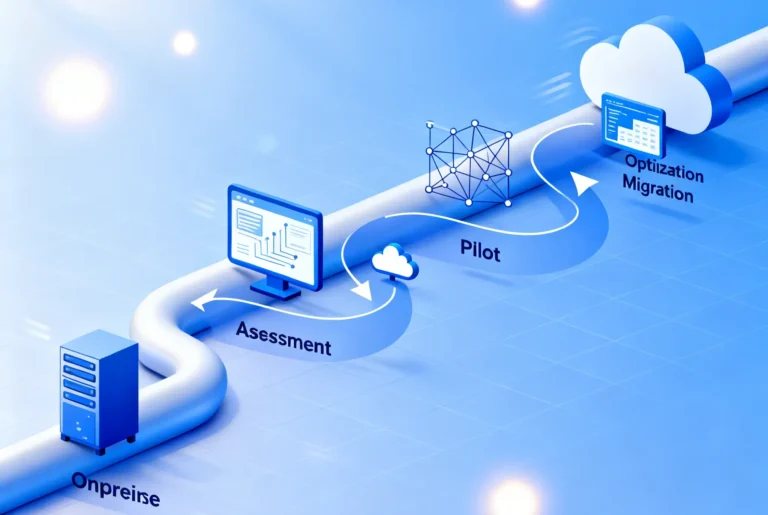
Once readiness has been evaluated, the next step is to convert strategic insights into a structured execution plan. This plan is typically known as a cloud migration roadmap, which outlines the stages and priorities of the migration process.
A roadmap helps ensure migration occurs in a controlled sequence while aligning infrastructure changes with business priorities.
|
Migration Phase
|
Purpose
|
Key Outcome
|
|---|---|---|
|
Assessment
|
Analyse infrastructure, applications, and dependencies
|
Identify suitable workloads for migration
|
|
Strategy & Planning
|
Define architecture, governance models, and migration methods
|
Align cloud adoption with business goals
|
|
Pilot Migration
|
Move selected workloads to test processes and architecture
|
Validate migration tools and procedures
|
|
Phased Migration
|
Gradually migrate workloads based on priority and complexity
|
Maintain operational stability
|
|
Optimisation
|
Monitor performance, costs, and infrastructure efficiency
|
Improve cloud resource utilisation
|
This phased framework allows organisations to validate migration processes early while ensuring critical systems remain stable throughout the transition.
Preparing the Organisation to Migrate to Cloud
Before beginning migration, organisations should ensure that their teams, governance frameworks, and operational processes are prepared for cloud environments. The following checklist helps IT leaders align internal readiness with migration objectives:
- Ensure IT teams understand cloud operating models such as automated infrastructure provisioning, monitoring distributed workloads, and managing cloud resources efficiently.
- Invest in cloud training and certification programs for engineering teams, since 85% of organisations consider continuous cloud upskilling essential for digital transformation.
- Define governance policies that specify how cloud resources will be deployed, monitored, and secured to maintain compliance and operational control.
- Establish cost management practices, including monitoring tools and budgeting frameworks, to prevent uncontrolled cloud spending.
- Encourage collaboration between infrastructure teams, developers, cybersecurity specialists, and compliance teams to ensure aligned decision-making during migration.
- Address skill gaps early, as 67% of enterprises report difficulties with cloud-native development skills that can delay migration initiatives.
- Implement clear documentation and operational guidelines so teams can maintain consistency in how cloud services are deployed and managed.
Case Study: How Strategic Cloud Migration Delivered Measurable Results
A Fortune 500 financial services company recently migrated its legacy infrastructure to a cloud-native architecture after developing a phased migration strategy. The organisation began with a detailed assessment of its existing systems and then implemented a structured migration plan using containerised workloads and automated infrastructure provisioning.
The results highlighted the impact of strategic planning. The company achieved a 40% reduction in infrastructure costs, 3× faster deployment cycles, and a 60% improvement in incident response time, while maintaining 99.99% uptime during migration.
This example demonstrates how organisations that combine a clear strategy with structured migration planning can improve scalability, operational efficiency, and long-term infrastructure performance.
Conclusion
The cloud is the ultimate catalyst for enterprise agility, but it is an unforgiving environment for the unprepared. A well-orchestrated cloud migration strategy acts as your organisational compass, ensuring that every dollar spent on infrastructure directly correlates to a competitive advantage. By investing in the planning phase today, you protect the bottom line of tomorrow and ensure that your technology stack remains an asset rather than a liability.
To move forward with a migration plan built on the right foundations, explore Accveil’s cloud migration services and planning and discover how we streamline high-stakes migrations with the precision, security, and speed that enterprise complexity demands.
Table of Content
- What is a Cloud Migration Strategy?
- Why Enterprises Struggle Without a Strategy
- Key Benefits of Developing a Cloud Migration Strategy
- Conducting a Cloud Readiness Assessment
- Building a Cloud Migration Roadmap
- Preparing the Organisation to Migrate to Cloud
- Case Study: How Strategic Cloud Migration Delivered Measurable Results
- Conclusion