Best Network Monitoring Tools: PRTG vs SolarWinds 2026
Written by : Team Accveil

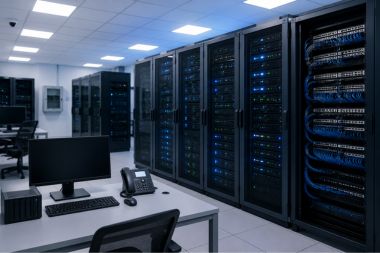
Your enterprise network architecture serves as the unseen but essential backbone of your entire business, and it’s under constant threat of disruptions from invisible operational factors. With distributed modern workplace structures becoming the norm, any small unmonitored hardware issue or even a minor limitation on bandwidth can immediately bring down your main transactions. Choosing the most effective network monitoring tools is not just a matter of infrastructure maintenance; it’s actually a critical decision amounting to millions of dollars that will have a direct impact on protecting your corporation from interruption. Deployment of second-rate visibility assets is not an option for IT directors because the demand for modern, cloud-first enterprise architectures is absolute uptime and real-time oversight.
Deciding on the best monitoring solution would involve a careful, thorough, in-depth PRTG vs SolarWinds comparison, the only real powerhouses in this segment. Through performance contrasts, scalability vs. flexibility debates, and deployment models, this architectural breakdown will show you the key differences between these two monitoring tools in the present tech industry. By taking these two major monitoring platforms plus other potential software options into account, you can be completely sure about the best network monitoring software in 2026 for your specific business operations.
The Contenders: PRTG and SolarWinds Profiles
Deep Diving into PRTG Network Monitor
Paessler PRTG takes a one-stop-shop approach to infrastructure monitoring. It gives a pre-equipped system of sensors that measure various health metrics.
• Telemetry driven by sensors: Every monitored item, be it a network port, CPU core, or ping test, is equal to one sensor.
• Brief Set-up: The system is a compact all-in-one solution that enables IT departments to install software and map the network quite quickly.
• Scope of Use: It is very suitable for teams working towards an open view and at the same time avoiding management of several tools.
Understanding SolarWinds NPM India
Designed to be exactly tailored for large-scale, complex enterprise spaces, SolarWinds NPM India delivers top-tier, multi-vendor performance monitoring at scale with unparalleled expertise.
• Scaling Based on Modules: This product is a very dependable Orion platform that lets users add special modules when the infrastructure footprint expands further and further.
• Advanced Path Analysis: NetPath technology is used to create 100% end-to-end visual maps, including every routing hop at public and private lines.
• Enterprise Authority is the product that is extensively distributed in big multi site grids that require high resolution multi vendor device visibility.
Architectural Deep Dive: Feature Comparison
Evaluating the best network monitoring software 2026 is not a task to be done based on marketing claims only. We will see which core architectural features we should rely on. Let us find out how PRTG and SolarWinds handle data collection, system, and alert dashboard orchestration across complex setups:
Data Collection and Protocol Engineering
Being able to keep track of a large set of different multi-vendor devices in real-time will only be possible over time if there is deep compatibility with lots of up-to-date protocol engines.
• Essential SNMP Capabilities: Both products are very good at SNMP monitoring and will query and pull information from Management Information Bases (MIBs) of different devices to get the most fundamental health indicators.
• PRTG Sensor Logic: By default, it comes with a set of ready-made sensors that can extract metrics from lots of hardware vendors.
• SolarWinds Polling Depth: Their system is very smart and uses a universal device poller as a base that is really flexible and can cope with complex custom OIDs even if these are used over many old devices.
• Flow and Packet Analysis: To discover the cause and the time of traffic surges, consider being able to process advanced flow protocols like NetFlow, J-Flow, and, and sFlow in a totally smooth and effortless way.
Alerting Mechanics and Anomaly Detection
Flooding an internal IT engineering team with hundreds of false alarms during a minor incident often means dangerous alert fatigue. Static Threshold Limitations:
• The most basic SNMP monitoring tools use fixed limits and will throw alerts once the metric goes beyond those pre-set lines.
• Intelligent Baselines: SolarWinds performance baselines are dynamically built on your own environment through statistical calculation engines.
• Notification Delivery: Both systems quickly deliver the alerts through SMS, email, webhook integrations, and direct ticketing systems.
Customization and the Network Monitoring Dashboard
A contemporary network monitoring dashboard should be able to convert simple data from the performance of the equipment (network devices) into meaningful information so that engineers and executives can see their results and make decisions based on that.
• PRTG Maps Interface: This allows you to draw and customize highly visual and very intuitive maps by dragging and dropping elements. Status boards are colour-coded in grids, which makes it a piece of cake to pinpoint issues and troubleshoot faster.
• SolarWinds WebConsole delivers fully integrated network monitoring dashboards with multi-tenant options, allowing system metrics to be correlated at different layers of the infrastructure

Alternative Landscapes: Zabbix, Nagios, and Beyond
As no IT application is suited to all the happenings of each enterprise, it is no less important to compare the alternatives in network monitoring before a final investment decision is made. Allow us to examine how the various important monitoring applications compare to the market leaders:
The Open-Source Challenge: Zabbix vs PRTG
When comparing Zabbix vs PRTG, companies are advised not to look solely at the price; with Zabbix, they may be getting a tool that costs nothing for a license, but they might still have to spend internal engineering hours on system configuration.
• Zabbix Deployment Flexibility: The product allows users to create unlimited custom templates and supports agentless monitoring without hard software restrictions.
• Operational Drawbacks: The tool demands the presence of specialized and knowledgeable people within the company, whereas PRTG delivers a system that can be started and used without being configured extensively.
Legacy Infrastructure Powerhouses: Nagios vs SolarWinds
Pit Nagios vs SolarWinds for a look at the difference in operations – it’s essentially command-line scripting vs. the shiny modern monitoring software.
• The real magic of Nagios is how solid and reliable it is in running scripts that carry out your monitoring, whether it is checking if a server/service is up or down or the more intricate monitoring done with simple plugins.
• Shortcomings of Platform: It doesn’t really provide the more sophisticated and native network performance monitoring analytics for teams of a very large size like SolarWinds does with automated features.
Enterprise Mid Market Competitors: ManageEngine OpManager India
As a scaling region corporation, Manage Engine OpManager India is one of the most cost-effective device-level monitoring solutions for large IT footprints.
• Unified Operations Suite: Offers complete network discovery, configuration management, and storage analysis together in an on-premises solution.
• Accessibility: Allows teams restricted by PRTG to move over without SolarWinds’ big infrastructure footprint, making it an ideal intermediary
The Modern Paradigm: Hybrid, Cloud, and AIOps
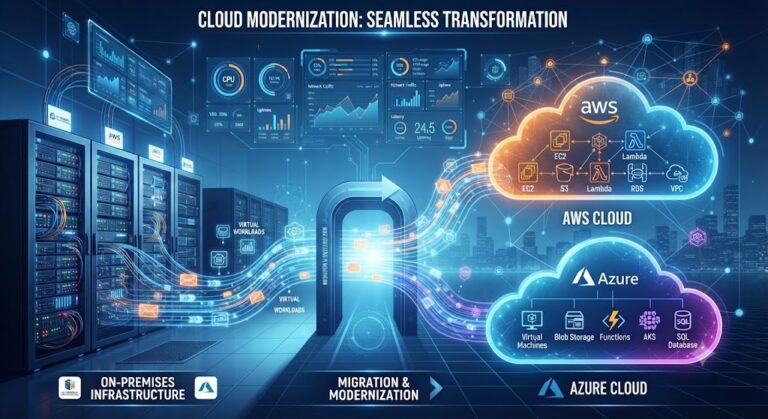
At present, enterprise premises have advanced really far beyond local machine rooms. They have become so vast and complex that there is a demand not only in enterprise server rooms at the company premises but also for distributed infrastructure monitoring that will cover all the deployed systems, including local cloud, remote offices, or cloud.
Dealing with Mixed Network (Hybrid Network) Monitoring
Enterprise IT today needs a strong hybrid network monitoring platform that can not just physically monitor but also monitor the data flows on the cloud. This allows you to keep a tight grip throughout on data flows in physical hardware as well as in cloud instances.
• A comprehensive single view of the network layout is another must-have. This implies systems must be able to track traffic flow in all its aspects, like from local office routers down to public cloud instances.
• Uniform Performance Assessment across Environments: Having the same set of tools to track and analyse performance in different environments is key to maintaining visibility without gaps even at the cloud level.
The Rise of Cloud Network Monitoring Tools
Using cloud network monitoring tools designed for the job helps guarantee that servers and infrastructure assets deployed over the cloud maintain their top performance while remaining secure.
• API-based Asset Discovery: This feature fetches current performance data directly from AWS, Azure, and Google Cloud environments, eliminating the requirement for local agents or agents based on hardware.
• Scaling Asset Discovery Dynamically: Our system will discover and continuously monitor both virtual machines with limited life spans as well as containerized micro-applications when they change scale automatically.
Future Proofing with Datadog Network Monitoring and AIOps
Companies aiming for sophisticated observability are adding the functionalities of network monitoring for Datadog and AIOps network monitoring to their technology infrastructure
• Telemetry consolidation: Datadog puts together logs, computer system traces, and real-time network metrics inside one cloud-native dashboard UI.
• Machine Learning Alerting: Predictive analytics by advanced AIOps network monitoring systems enable the detection of performance anomalies before users experience lag.
Comparing Enterprise Monitoring Platforms
Selecting the correct solution calls for having an unambiguously clear and organized overview of the different ways these leading network monitoring tools perform in crucial operational areas. The following table outlines the main functional differences between the best software options:
Functional Category | Paessler PRTG Monitor | SolarWinds Orion NPM | Datadog Observability |
Licensing Metric | Calculated via total active sensors. | Calculated via total managed devices. | Calculated via cloud hosts and data flow. |
Deployment Model | Primarily on-premises or hosted. | On-premises, hybrid, or private cloud. | 100% cloud-native SaaS delivery. |
Path Analytics | Basic traceroute hop text views. | Deep visual NetPath maps. | Virtual private cloud flow maps. |
AI Capabilities | Basic static anomaly alerts. | Automated dynamic baselines. | Advanced machine-learning AIOps. |
Vendor Support | Comprehensive standard support plans. | Dedicated enterprise tier support. | 24/7 digital ticketing and documentation. |
Conclusion
Your choices today on the commercial network monitoring tools to use should weigh your specific scaling targets and architectural complexity. Organizations will eventually see that it makes sense to do a PRTG vs SolarWinds assessment and maintain visibility for their operations. Pretending to rely on simple, free network monitoring tools is fine for small teams at the beginning, but large companies need sophisticated platform protection for their digital ecosystems.
At Accveil, our expertise lies in designing, deploying, and managing enterprise monitoring architectures that are second to none and that are capable of keeping your key business processes running smoothly. We realize that there are certain requirements for a top-notch network performance monitor India which must match your own company’s infrastructure with the right suite of software tools. By reviewing the best network monitoring tools in the market, we identify and bridge the blind spots for visibility, paving the way for successful digital transformation.
Our all encompassing network monitoring systems are equipped with advanced AIOPs network monitoring and the latest in Real-Time Hybrid Network Monitoring for complete global infrastructure security from one central control point. You can count on us to not only deliver top level network visibility but also to turn this visibility into a long-term, reliable competitive advantage for your business.
Key Takeaways for the Reader
• Scale Match of Tools: PRTG performs very well in mid-size installations as an onboarding tool quickly; at the same time, SolarWinds delivers the deep scalability enterprise-wide networks require.
• Scoop up Full Protocol Depth: Your monitoring platform needs to support both SNMP and a performance flow tool to collect all the needed details.
• Better Dashboards: A network monitoring dashboard must be a way of identifying the cause quickly and filtering all the unnecessary alerts during a critical network incident.
• Don’t be Limited to the Freeware: Though free network monitoring software is fine for testing, enterprise availability calls for corporate support and automated discovery.
• Design with Tomorrow in Mind: By shifting to cloud-based monitoring, you will be able to keep your teams’ visibility if workloads are no longer running on premises.
FAQ
What is the difference between PRTG and SolarWinds for network monitoring?
PRTG uses a sensor-based licensing model and is known for a fast, all-in-one setup that suits mid-sized teams wanting a single dashboard without managing multiple tools. SolarWinds NPM is built on the modular Orion platform, scales through add-on modules, and includes deep NetPath visual mapping making it better suited for large, complex, multi-vendor enterprise networks.
Which is better for enterprises PRTG or SolarWinds?
SolarWinds is generally the stronger fit for large enterprises because of its deep path analytics, dynamic performance baselines, and dedicated enterprise support tier. PRTG is better for organizations that want quick deployment and a simpler, unified sensor-based view without heavy configuration overhead.
Is Zabbix a good free alternative to PRTG?
Zabbix is open-source and license-free, offering unlimited custom templates and agentless monitoring. However, it requires specialized in-house engineering expertise to configure and maintain, whereas PRTG is designed to be operational with minimal setup so the “free” tool often carries a hidden cost in internal labor.
What should I look for in a network monitoring dashboard?
A good network monitoring dashboard should convert raw device and traffic data into actionable insight supporting fast root-cause identification, filtering out non-critical alerts during incidents, and offering visual, color-coded status views (like PRTG’s map interface) or multi-tenant correlation across infrastructure layers (like SolarWinds’ WebConsole).
How does AIOps improve network monitoring compared to traditional tools?
Traditional tools like PRTG and standard SNMP monitoring rely on static thresholds that can trigger frequent false alarms. AIOps-driven platforms, such as Datadog, use machine learning to build dynamic baselines and predict anomalies before they impact users reducing alert fatigue and enabling faster, more accurate incident response.
Table of Content
- The Contenders: PRTG and SolarWinds Profiles
- Architectural Deep Dive: Feature Comparison
- Alternative Landscapes: Zabbix, Nagios, and Beyond
- The Modern Paradigm: Hybrid, Cloud, and AIOps
- Comparing Enterprise Monitoring Platforms
- Conclusion:
- Key Takeaways for the Reader
- FAQ