ERP Implementation for Indian SMEs: Cost & Guide
Written by : Team Accveil
Managing a fast-growing business with the help of unconnected spreadsheets, manual billing books, and disconnected messaging platforms is as dangerous as driving a car on a congested road with your eyes shut. Nearly 70% of Indian small and medium enterprises that are growing encounter a growth wall just because they fail to keep their operations in sync with the orders they receive. For smooth scalability of operations, it is absolutely essential that you invest in ERP implementation services for your enterprise.
Utilization of advanced management solutions allows growing Indian enterprises to streamline their workflow, minimize operational leakages, and get a real-time view of what is happening in every department. The process of implementing management systems demands a lot of planning and cost control. In today’s article, we shall talk about costs, implementation strategies, vendor selection, and other tips for deploying systems in India.
Understanding Digital Transformation: ERP Software for Growing Indian Businesses
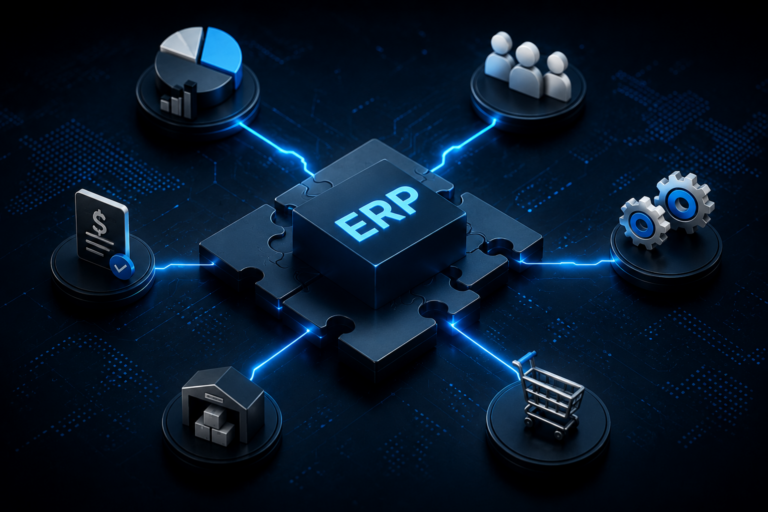
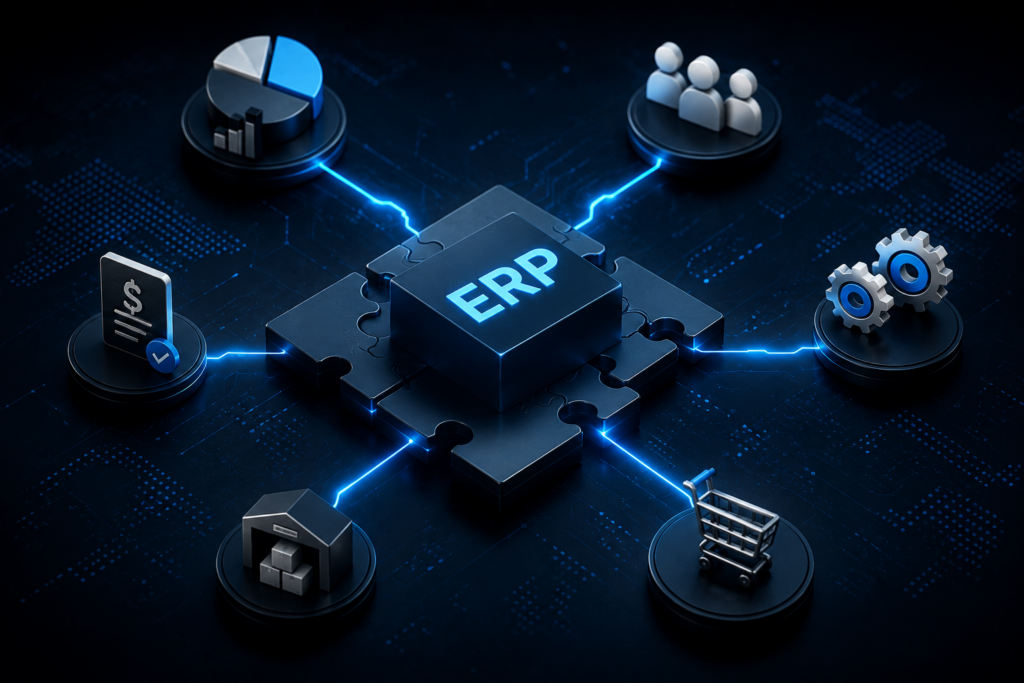
Contemporary ERP systems integrate inventory management, accounting, HR, purchasing, and sales into one central digital platform. Implementation of professional ERP solutions enables managers to make informed decisions without facing any operational difficulties.
Business Benefits from System Unification
Integration of corporate data provides the ability to act rapidly, be highly accurate, and collaborate across different departments.
• Control over Operations Centralization: Procurement of certified ERP solutions ensures that all warehouse inventory is integrated into accounting and sales processes.
• SME Process Integration: Use of ERP software tailored for SMEs assists in handling large amounts of orders without hiring more staff.
• Specific SME Management: Selection of ERP systems customized for small business processes enables GST compliance and e-invoicing processes.
• SME Customization within Specific Sector: ERP implementation for SME manufacturers enables effective purchasing, monitoring, and scheduling of production.
• ERP Consulting Services for Effective System Design: Cooperation with experienced ERP consulting services allows you to get the right software solution.
Overcoming Manual System Bottlenecks
Manual data entry is time-consuming and results in more errors in the process of customer fulfillment.
• No Spreadsheet Mistakes: ERP software for SMEs helps avoid mistakes in inventory calculations and invoice records.
• Small Businesses Simplified: Using a flexible ERP system for small businesses enables small companies to concentrate on making money.
• Optimize Factory Operations: ERP for manufacturing SMEs lowers scrap materials and increases the efficiency of machinery.
• ERP Consulting Services: Working with experienced ERP consulting companies will save you from making a wrong choice.
• Certified ERP Implementation: Hiring professional ERP implementation services ensures that you get smooth data integration and fast training.
Financial Architecture: Understanding Costs and Pricing Factors
The considerations involved in the pricing of software include licensing, deployment effort, level of customization, and maintenance.
Factors Involved in Software Investment
The price of software is highly dependent on the model of deployment, number of seats required, and functional needs unique to each particular industry.
• Market Pricing Evaluation: Examining the usual ERP cost structure in India enables business leaders to allocate enough money for the licenses and user seats.
• License Evaluation: Studying the parameters used in ERP software pricing India ensures clear insight into the monthly cloud subscription costs.
• Deployment Model Evaluation: Evaluating cloud ERP systems and traditional on-premises ERPs allows companies to find a balance between initial low cost and hardware maintenance later on.
• Working With Local Experts: Hiring a reliable ERP implementation agency in India allows companies to plan predictable billing.
• Legacy Accounting Records Protection: Budgeting ERP migration services safeguards accounting records while transferring to new systems.
Budgeting for Deployment Success
ERP software investments must account for money spent on staff training, customizing workflows, and support post-rollout.
• Managing Cost Elements for Total Cost Management: Calculating real ERP cost India involves considering elements such as data cleansing, training costs, and system integration.
• Considering ERP Pricing Models: ERP software pricing India allows management to pick scalable user packages.
• ERP Infrastructures Models Selection: Choosing cloud-based ERP or on-premise infrastructure decides if you need to have in-house server hardware or not.
• Collaboration with Local Experts: Partnering with a local ERP implementation expert in India ensures that you get training and assistance with GST implementation.
• Preventing Data Loss When Migrating: Having ERP migration experts prevents corruption of data during migration to cloud systems.

Selecting Architecture: Cloud ERP vs On-Premise for Indian Enterprises
A fundamental infrastructure choice is whether to use on-premise servers or cloud-hosted platforms. Indian small and medium-sized businesses need to strike a compromise between long-term IT maintenance capabilities, upfront capital expenditure, mobility, and security.
Infrastructure and Deployment Comparison
By examining operational trade-offs, you can make sure that your digital foundation aligns with the technological capabilities and working style of your business.
Evaluation Metric | Cloud-Hosted ERP Solution | On-Premise ERP Architecture |
Upfront Capital Expense | Low initial cost; operational subscription model | High initial investment in servers and hardware |
Maintenance & Upgrades | Automatic updates managed by software vendor | Requires dedicated internal IT staff for maintenance |
Accessibility & Mobility | Secure real-time access from any mobile device | Restricted to local office networks unless VPN is built |
Implementation Speed | Rapid deployment timeline; pre-configured templates | Slower setup due to physical server installations |
The comparison between cloud ERP vs on-premise shows how modern companies need flexibility. Picking up the best ERP software India 2026 gives companies high availability and enterprise-level data security. Using cloud ERP vs on-premise helps teams get real-time data about inventory and sales from any place. Using the best ERP software India 2026 will make the expansion to AI and automation easier for growing firms.
Strategic Roadmap: The ERP Implementation Process Steps
A well-planned software release is carried out by sticking to a methodical, step-by-step process that limits operational disruptions to a minimum. A carefully laid-out plan ensures that none of the modules will be deployed live until they are checked thoroughly on testing grounds.
Part one: Project identification and definition. Determine the business goals, requirements, and boundaries of the work.
Bring essential decision-makers together to visualize current work streams, find out where work is hampered, and clearly state project aims. Set down deadlines, key performance metrics, and financial limits.
• Phase 1: Evaluation and vendor contract with vendor and architect for software design. Choose the best-fit platform and a vendor-certified team.
Assess leading software solutions and pick a qualified delivery crew. Draft customized workflow designs, role-related permissions, and database structures per your business operations.
• Phase 2: Moving the old data and connecting the systems. Get rid of old data and make sure the database transfer is encrypted.
Old accounting and stock records have to be cleaned up, formatted, and audited, after which encrypted data is transferred to the database through a third-party database integration tool.
• Phase 3: Test your employees, train them, and do the final launch: Test your employees and train the working team as required.
Carry out UAT in all business departments as an integral part of the system. Offer comprehensive training that includes using computers and equipment, then do the actual change-over, and finally make the system available with live assistance.
Sticking to the right ERP implementation process steps helps digital transformation of a company remain in line with the project schedule. A well-prepared ERP implementation project reduces any risk and uncertainty that might happen in the week of go-live. A systematic ERP implementation roadmap keeps the project on time and users happy. Having a well-documented ERP implementation roadmap helps the business and project teams stay in complete communication with each other throughout the whole project.
Risk Management: ERP Implementation Challenges & Best Practices
• Managing challenges that typically occur when implementing an ERP system is a matter of top management’s active support, transparent communication with all stakeholders, and assigning clear cut roles to users.
• Aligning business practices with ERP implementation best practices is a safe bet to keep the work of your team within the set scope and budget limits of the project.
• Through the proper execution of ERP integration services, you will connect your internal systems with the CRM, banking APIs, and e-commerce platforms, to name a few.
• Tactically crafting an ERP deployment strategy is the first step toward keeping operations in gear even during a transition phase without getting hit by a productivity loss.
• A thorough review of an ERP implementation checklist will help project managers stay responsible for all critical steps in the project timeline.
Essential Best Practices for Seamless Rollouts
Cultivating an atmosphere of openness and constant improvement can greatly enhance long term users’ happiness and systems’ health.
• Getting Employees on Board: The major ERP implementation challenges will only be conquered through early involvement of the floor staff in the workflow design meetings.
• Taking a Consistent Approach: When standardizing workflows, you get to minimize a lot of complex customization that may have otherwise been required.
• Creating Operational Ecosystems: A powerful ERP integration services will ensure the smooth exchange of sales, production and shipping data in real-time.
• Designing Staged Go Lives: A flexible ERP deployment strategy allows teams to roll out the core financial modules right away before they get to the advanced features.
• Verifying Readiness Milestones: An exhaustive ERP implementation checklist is one of the key ways for checking whether data backups and user permissions are totally secure.
Selection Blueprint: ERP Vendor Selection Guide & Consulting
Choosing who you partner with to deliver and implement the software is just as crucial as how the software is chosen. Trustworthy consulting firms have a deep understanding of different industries, strong technical ability, and a commitment to being there even after the software is launched.
The process of selecting Consulting Partners and Advisory Teams
Optimizing for delivery with teams that have sector experience not only brings great executional success to projects but also shortens the timeline to return on investment.
Analyzing the selection of vendors by utilising a detailed ERP vendor selection sheet is a way for management to understand software capabilities, vendors’ reliability, and service level agreements (SLAs).
• Making Use of Expert Advisors: The hiring of a specialised ERP consulting service allows for receiving independent, unbiased technical advice when the contract is being negotiated with the vendor.
• Taking Advantage of the Partner with Local Insights: An India-based, established ERP implementation partner will assist in on-site training support and will also be fully familiar with the local tax regulation changes.
• Goes without saying that if you are looking for ERP Software India 2026, the article will tell you which are among the best ERP systems on the market that are cloud-native and that scale really quickly.
• Data migration from older systems is managed: By hiring a seasoned ERP migration consultant, your historical transactional data can be moved into a new data model safely and securely.
Driving Long-Term Return on Investment
Well-defined performance indicators let you see that your digital investment is gradually improving operational efficiency.
Systems for Assessing and Rating: The use of a systematic ERP vendor selection guide prevents the purchase of over-complex software whose complexity may overwhelm the staff.
• Draw on Experts for Consulting: By engaging expert ERP consultants for services, you can design workflows with less effort and quite a bit cut the time for deploying solutions.
• Partner With Regional Leaders: Partnering with an experienced ERP implementation partner India guarantees that when it comes to sudden technical problems related to the system, you will get prompt technical solutions.
• Gearing Up for the Future of the Software: Choosing platforms that are on the Best ERP software India 2026 list gives your company the edge in digital competition.
• Finding Good Data Transferring Means: Certified ERP migration services are the key in keeping your data secure and intact while handling complex updates of databases.
Core Planning Checklist for Indian SME Leadership
Review this strategic checklist thoroughly before signing the software contracts or starting implementation.
• Appoint Project Champion at Higher Management Level: Select a project champion within the organization to spearhead change management and oversee the enforcement of project deadlines.
• Clean Legacy Databases: Check for and remove duplicate customer records, outdated inventory SKUs, and wrong accounting entries before moving to a new database.
• Identify Key Workflows: Describe core operational processes, approval chains, and reporting needs of every department in the company.
• Determine Integration Needs: List and describe the existing software tools, payment gates, and hardware devices that need to interface with the new system.
• Arrange Comprehensive Staff Training: Organize user training sessions for all stakeholders before the go-live date.
Adhering to our ERP implementation checklist makes the project go smoothly. It not only saves you the hassle of last-minute surprises that could jeopardize the success of the new system, but an ERP implementation checklist also serves you in safeguarding your money and ensuring your employees get quickly started with the change.
Conclusion
It has been a long time since a product or a service could simply be put in a paper brochure for potential clients to pick up and buy. The markets have become far more dynamic, and in that setting, moving away from manual processes to going fully digital has become a prerequisite. As companies grow, in particular in India, they look for fast order fulfillment on one hand and real-time visibility of the operations but. So, investing in top ERP consultants is the right route to get a durable competitive edge. Accveil’s team mainly focuses on helping small and medium enterprises in India to move to digital solutions without any friction. Through full-spectrum consultancy, hassle-free data migration to a new system, tailor-made feature development, and extensive user training, Accveil makes it their top concern that each implementation not only gets done but also that it is done well enough to give a high ROI in the end. The project delivery team is always on the side of the management so that together they can come up with the best-fit digital system which will help in complying with regulatory requirements and the optimization of supply chains without any effort on the part of the company, and at last, the company will be able to scale up its business very quickly in this digital age.
With digital transformation being such an ambiguous and difficult process, it is a good idea to work with the implementation consultants at Accveil who have a deep understanding of the technology as well as know the market dynamics of Indian companies quite well. If you are ready to go digital and want an enterprise with automated processes then contact the experts at Accveil today.
Key Takeaways for Business Leaders
• Invest In Digital Unification: By replacing fragmented manual tools with one ERP software that will serve the needs of SMEs through seamless integration, the latter can be greatly assisted in streamlining their work as well as growing.
• Follow A Disciplined Process: Carry out the ERP implementation process in a systematic way to deliver the project on time and within the budget.
• Prioritizing Cloud Architecture: Instead of an on-the premises solution, go for a modern cloud ERP so that you get real-time mobile access, automated updates, and lower IT overhead.
• Mastering Change Management: If you want to successfully manage ERP changes, it is a good idea to get staff trained early on, and also to maintain clear internal communication.
• Partner with Certified Experts: Choose a certified ERP implementation partner India that can, among other things, take care of localized GST compliance, custom integrations, and provide support after the ERP has been launched.
FAQ
How much does ERP implementation cost for an SME in India?
ERP implementation costs in India depend on the deployment model, number of user seats, and level of customization. Cloud-based ERP typically has a lower upfront cost with monthly subscription pricing, while on-premise ERP requires higher initial investment in servers and hardware plus dedicated IT staff. Total cost also includes data cleansing, staff training, and system integration not just the software license.
Is cloud ERP or on-premise ERP better for Indian small businesses?
Cloud ERP is generally better for growing Indian SMEs because it needs lower upfront capital, offers automatic vendor-managed updates, and allows secure mobile access from anywhere. On-premise ERP suits businesses needing full local control but requires bigger hardware investment and in-house IT support. Most SMEs scaling quickly choose cloud ERP for faster deployment and flexibility.
What are the main steps in the ERP implementation process?
The ERP implementation process has three core phases: (1) project definition, where goals, budgets, and KPIs are set with key stakeholders; (2) vendor evaluation and system design, including workflow mapping and data architecture; and (3) data migration, integration, testing, staff training, and go-live with live support.
What are the biggest challenges in ERP implementation and how can they be avoided?
The biggest ERP implementation challenges are employee resistance to change, poor-quality legacy data, and unclear integration requirements. These are avoided through early staff involvement in workflow design, cleaning legacy databases before migration, strong top-management support, and following a documented implementation checklist covering data backups and user permissions.
How do I choose the right ERP vendor for my business in India?
Choose an ERP vendor in India by evaluating their industry experience, technical capability, and post-launch support commitment using a structured vendor selection checklist. Look specifically for a local partner familiar with GST compliance and Indian tax regulations, since this affects both implementation speed and ongoing compliance accuracy.
Table of Content
- Understanding Digital Transformation: ERP Software for Growing Indian Businesses
- Financial Architecture: Understanding Costs and Pricing Factors
- Selecting Architecture: Cloud ERP vs On-Premise for Indian Enterprises
- Strategic Roadmap: The ERP Implementation Process Steps
- Risk Management: ERP Implementation Challenges & Best Practices
- Selection Blueprint: ERP Vendor Selection Guide & Consulting
- Core Planning Checklist for Indian SME Leadership
- Conclusion
- Key Takeaways for Business Leaders
- FAQ