Managed IT Services: Complete Guide for Businesses [2026]
Written by : Team Accveil

In 2026, it will become a real source of delay in the company if you rely on your only internal department to cope with the changes of the cloud, to stop a zero-day ransomware attack, and to keep your network stable. Most companies waste thousands of dollars each year just by waiting for something to break so that they can repair it.
Today, the right solution is systematic optimization. Transforming your technology environment from a reactive “break-fix” panic to a well-designed architecture needs external scale.
This in-depth manual explains how to utilize the latest infrastructure to secure your business systems, enhance employee productivity, and get the most out of your technology expenditures.
Quick Summary: What Modern IT Management Solves
• Core Idea: Getting external engineering experts to manage your digital architecture, protect network security, and provide helpdesk services daily.
• Strategic Change: Instead of using tech support only during emergencies, you get around the clock monitoring of your network with automated optimization of your systems as well.
Understanding Modern Managed IT Services
Managed IT services are essentially the practice of entrusting a specialized, external firm with the entire management of technological aspects of one’s business on a regular basis.
This operational model regards technological infrastructure as a living asset rather than a utility that gets your attention only when it stops working.
A dedicated managed service provider acts as a part of your leadership team, taking on the demanding technical work. Their main focus is quite straightforward: ensure maximum availability of data at all times while completely getting rid of any operational downtime.
• Continuous Engineering Oversight: Cloud, local, and endpoint device administration is kept active.
• Strategic Security Alignment: All company endpoints are secured with live patch management as well as equipped with advanced threat detection software.
• Proactive Architectural Scaling: Technology roadmaps are being created that unfold together with your real business revenue.
Core Pillars of Modern MSP Services
Basic password resets won’t deliver complete digital resilience, so modern msp services have to consider other options. A mature, high-performing outsourcing model is an intricate one with three different operational layers.
1. Remote IT Management
Ongoing background administration is what keeps your endpoints running efficiently, compliant, and at their best.
• Automated Asset Optimization: Moving a step further with silent software updates, driver patches, and disk cleanups without interrupting employee workflows.
• Continuous Performance Tracking: Discovering memory leaks or server overloads before it results in the interruption of a customer-facing application.
• Centralized Configuration Control: Making sure every laptop connected to company networks adheres to the same, very strict data policies.
2. Outsourced IT Support
System breakdowns can be tough. Tier-structured technical resolutions help you regain business continuity quickly.
• Live Helpdesk Access: A direct line to certified enterprise engineers capable of live troubleshooting complex system faults.
• Predictable Ticket Resolution: Guaranteed SLA adherence (Service Level Agreement) that sees major bugs getting resolved in a matter of minutes.
• Hardware Lifecycle Administration: From keeping all physical-office-machinery inventory to diagnosing problems and readiness assessment for deployment or retirement.
3. Dedicated Remote IT Management & Monitoring
A superior remote it management automatically protects your digital assets by detecting aberrant behavior internally and implementing countermeasures to external network threats 24/7.
• Perimeter Network Scanning: Observe internal firewalls and data paths with an aim to identify any unusual spikes in outbound corporate data traffic.
• Cloud Infrastructure Guarding: Checking cloud hosted database access logs for unauthorized leaks of credentials and taking necessary actions.
• Mobile Endpoint Shielding: Monitoring employee remote mobile devices to ensure that if a physical machine is compromised, corporate data can be wiped remotely.

Why Leading Brands Outsource Infrastructure Management
Relying solely on a local IT team can sometimes lead to major blind spots. Moving your company to specialized IT managed services India brings you a lot of functional benefits that not only result in savings but also help prevent losses.
Eradicating System Downtime by Proactive Issue Resolution
• Predictive Diagnostics: Addressing hard drive malfunctions or server overloading before the problems escalate and lead to a major outage in the company.
• Self Healing Errors: Using intelligent scripts to automatically restart the background database processes that have stopped working without any human help.
Getting On Demand Access to Global IT Experts
• Engineering Teams with various skills: Being able to use enterprise cloud architects, network engineers, and compliance specialists without getting them on payroll.
• 24X7 Availability: Ensuring that the systems are protected round the clock even when your local team is off.
Facilitating Enterprise Security Compliance
• On the Spot Compliance: Implementing automated auditing setups to meet global data privacy regulations effortlessly.
• Next Gen Threat Handling: Using automated sandboxing mechanisms to quarantine suspicious files so that malware doesn’t spread through your interconnected networks.
Selecting the Perfect IT Partner
While some technology partners might offer only limited operational value, others might be capable of bringing a significant operational boost to your company. If you are thinking of choosing a new managed service provider, it is a good idea not only to trust their marketing talk but also to check through their actual operational capabilities.
Key Vetting Setup
Hard and Fast Non Negotiable Metrics
• Documented Industry Experience: It is wise to engage a partner who has industry-specific expertise in dealing with the same software platforms, as well as compliance rules, that you have among your top concerns.
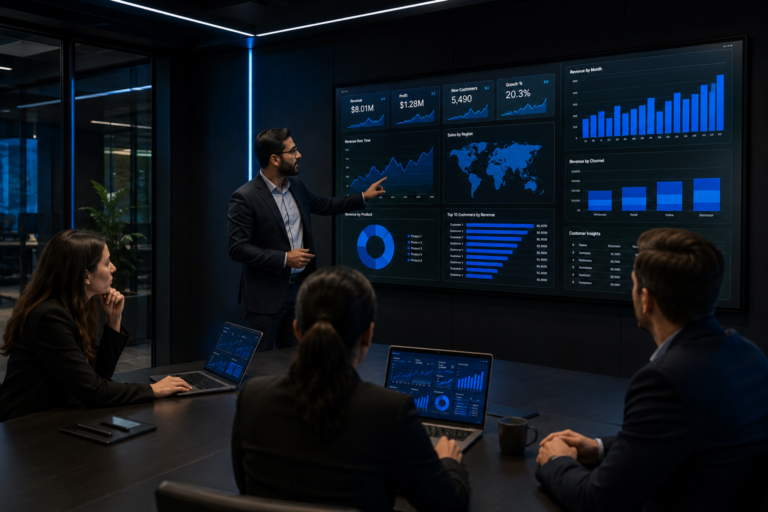
• Honest Operational Reporting: Make sure they offer unambiguous, real time dashboard analytics displaying network uptime with accuracy, speed in resolving tickets, and frequency of applying patches.
• Open Technical Architecture: It is better to stay away from the vendors who are only looking to lock you up into their exclusive, proprietary software systems. Your partner should be able to comfortably integrate their solution with your existing cloud infrastructure.
Conclusion
Nowadays, as business technology becomes more intricate, managing an entire enterprise network on your own can introduce unnecessary risks. Genuine digital transformation takes a strong infrastructure, continuous monitoring, and instant technical fixes. Partnering with a dedicated managed service provider will not only safeguard your data but also enable your team and help you use technology as an engine for scalable growth.
We at Accveil realize that your business cannot bear unscheduled downtime or security gaps. This is why we create superior managed IT services that regularly monitor your business technology systems, scale them up as needed, and protect them from issues 24/7. And, in addition to providing smooth, responsive outsourced IT support, we also perform thorough network administration. We offer regular, expert oversight that your business needs to prosper.
We offer the best IT managed services alongside MSP services that have been tailored to eliminate your daily operational challenges. Allow us to remove the heavy technical load from your hands so that you can focus on being the leader in your industry. Reach out to us now, and together we can enhance your operational architecture.
Key Takeaways for Business Leaders
• Proactive beats reactive: It is a very costly and old fashioned approach to corporate infrastructure management to wait for system hardware to fail before doing anything about it.
• Scalability calls for freedom: Outsourced IT support activities can be the best way to help the internal IT leadership to completely focus on product innovation.
• Continuous Surveillance is Mandatory: It is well known that the security of the digital world today needs to be always on the alert, and because of this, remote IT management systems that are structured to have close, constant monitoring will be key.
• Maximize Your Global Advantage: Collaborating with specialized teams in the field of IT managed services India, you can get the very best technical people and 24/7 operations.
FAQ
What's the difference between managed IT services and just hiring an IT guy?
An in-house IT person (or even a small team) is great for day to day stuff, but they can’t realistically cover everything cybersecurity, cloud management, compliance, after-hours monitoring all at once. Managed IT services give you a full team of specialists working behind the scenes, often at a lower cost than hiring that same expertise internally. Most businesses end up using both: an internal point of contact plus an MSP handling the heavy lifting.
How much do managed IT services actually cost in 2026?
It really depends on your company size, how many devices/users you have, and what level of support you need. Most providers charge a flat monthly fee per user or per device, which makes budgeting predictable no surprise repair bills. It’s worth asking for a clear breakdown during your first conversation with a provider rather than going off a generic price list, since every business’s setup is different.
Is managed IT services worth it for a small or mid-sized business?
Honestly, this is where it often makes the biggest difference. Smaller businesses usually can’t afford a full in-house security and IT team, which makes them more exposed, not less. An MSP lets a 20 person company get the same level of protection and uptime as a much larger enterprise, just at a fraction of the cost of building that out internally.
Can a managed service provider work alongside our existing IT staff instead of replacing them?
Yes, and this is actually the most common setup. Your internal team usually keeps handling things that need someone physically present or deeply familiar with your day-to-day operations, while the MSP takes care of monitoring, security, infrastructure, and the technical depth that’s hard to maintain in-house. It’s a partnership, not a replacement.
How do I know if a managed IT provider is actually good, or just good at sales pitches?
Ask to see real reporting uptime numbers, average ticket resolution time, patching frequency not just a sales deck. A good provider will happily show you live dashboards and won’t dodge questions about response times or past incidents. Also pay attention to whether they’re trying to lock you into proprietary tools or whether they integrate cleanly with what you already use. If they’re vague about either of those, that’s usually a red flag.
Table of Content
- Understanding Modern Managed IT Services
- Core Pillars of Modern MSP Services
- Why Leading Brands Outsource Infrastructure Management
- Selecting the Perfect IT Partner
- Conclusion
- Key Takeaways for Business Leaders
- FAQ