Cloud Migration Guide for Indian Businesses 2026
Written by : Team Accveil

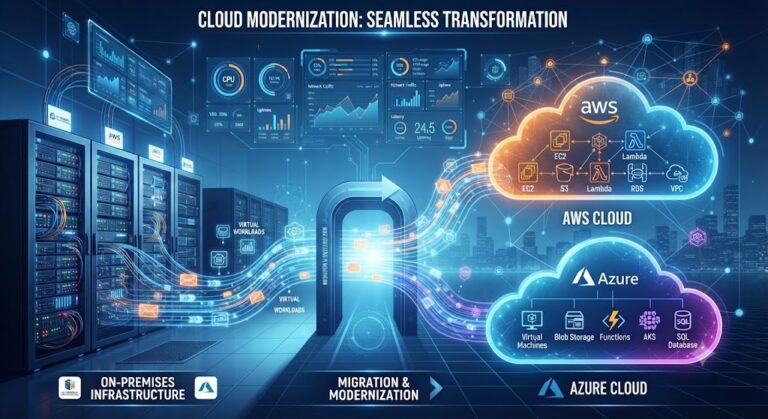
Working with old technology to run business operations has changed from a usual working method to a big source of problems in the working process. In the digitally changing environment of India, companies are quickly leaving the traditional local setups to get the timesaving and highly flexible features of the latest distributed networks. An entirely localized setup will not only slow down the deployment times but will also make systems more prone to the risk of data breaches and will limit the ability of the company to bring in and use AI. Getting professional cloud migration services is a way that companies can use to change their tech base into quick and highly responsive assets. This step-by-step roadmap explains the structural actions that you will need to take to make your business operation transition without harming the working continuity.
The Zero Click Migration Summary
Transferring corporate operations in the contemporary world to remote data centers needs a well-thought-out and step-by-step analytical approach that will ensure compliance is not sacrificed for compute efficiency. To make sure that the transition is successful, your technology leaders should come up with a well-defined strategy for a cloud migration India blueprint that is in line with the regulations of your industry. Choosing credible cloud migration services not only makes it easy to relocate major enterprise operations to the cloud, which is less restrictive compared to on-premise, but also gives the guidance you need to carry out a successful cloud migration. The right setup will evenly distribute your workloads across specialized infrastructure ecosystems through a combination of tailored AWS migration India, strategic Azure migration India and optimized GCP migration India procedures. Planning thoroughly for cloud readiness assessment allows you to foresee the total data transit friction and come up with the most reliable cloud migration cost India budget. Implementing a well-planned cloud migration strategy will lead to no surprise downtime as well as the gradual migration of old databases with advanced cloud migration tools.
1. Navigating the Indian Cloud Landscape in 2026
The Regulatory Realities of Local Data Sovereignty
Relocating enterprise infrastructure within the domestic market demands a very close following of local compliance laws and data handling rules. With the recent changes in the Digital Personal Data Protection (DPDP) regulations and revised MeitY selection criteria, haphazard data distribution is not allowed anymore.
• Compulsory Local Data Residency: Industries under regulation like BFSI and healthcare have to make sure that all sensitive citizen data is physically stored within the domestic geographical boundaries only.
• Implementing Strict Security Baselines: Up to date cloud migration strategy India Setups should incorporate complete encryption techniques that comply with the central regulations.
• Audit Ready Architecture Blueprints: Going for certified cloud migration services will guarantee that your newly installed digital setups are always in line with the changing national regulations.
Picking Your Platform Hyperscaler
Different infrastructure environments should be assessed for how their global features match the current technical skills of your team.
• Expandable Corporate Infrastructure Ecosystems: Carrying an AWS migration India project gives you unparalleled opportunities to tap into broad computing networks and specialized local developer tools.
• Enterprise Software Integration: Preparing an Azure migration India project supports businesses relying heavily on legacy Microsoft environments and hybrid configurations to integrate smoothly.
• Advanced Data Processing Networks: Performing a GCP migration India implementation allows technical teams to leverage sophisticated data analytics and contemporary containerized processing tools.

2. Setting Up the Structural Shift: Pre-Migration Strategy
Evaluating Infrastructure Readiness and Legacy Constraints
It is absolutely essential that you carry out a thorough technical examination of your computing situation before the very first database migration to a remote data center. Performing a detailed cloud readiness assessment not only helps you to uncover almost forgotten software dependencies but also points out doors of code that are normally closed since stand-alone environments do not house them.
• Mapping Software Dependencies: It is necessary to outline the modes of communication of your in-house applications to each other so that you can strategically avoid broken connection pathways during the live transition.
• Evaluating Network Bandwidth Needs: Monitoring your everyday data exchange rates helps figure out when the network would suffer a severe slowdown during the extensive file syncing phases.
• Identifying Technical Debt: Turn the assessment phase into an opportunity for uncovering legacy codebases that are candidates for rewriting for taking modern ecosystems.
Managing Project Expenses and Budget Projections
One of the main causes of running into uncontrolled cloud spending is committing poor upfront planning and failing to grasp consumption-based pricing models. Precisely estimating a cloud migration cost India projection model entails aligning infrastructure requirements directly with processing workloads.
• Getting Rid of Idle Hardware Expenditures: Make a move from inflexible capital expenditure models to clear, flexible operational expenditure ones.
• Right-Sizing Computing Resources: Keep from over-provisioning remote servers by aligning virtual machine sizes directly with actual historical data needs.
• Accounting for Data Movement Fees: Consider data egress charges and licensing fees for third-party software in your budgeting to keep these elements from becoming unpleasant surprises introduced into your monthly invoice.
3. Defining Your Technical Migration Roadmap
Choosing the Right Tactical Execution Setup
In fact, not all enterprise apps can be relocated by the same technical migration strategy. A detailed plan for adopting the cloud separates your applications into different groupings and assigns the best cloud migration roadmap to each piece of software. Basic workloads can be simply duplicated with a direct copying method, whereas integrated enterprise software usually needs a complete overhaul of the original code.
• Moving Infrastructure Quickly: Sticking to a simple lift-and-shift move strategy enables teams to relocate isolated applications rapidly without exploring the core code.
• Upgrading Old Business Systems: A deep legacy system migration means changing old software to make it cloud-ready with automated scaling.
• Reducing Production Downtime: Planning data cutover moments for times when there is minimal traffic will not only save a client’s experience but also guarantee transaction stability.
The Complete Migration Step-by-Step Checklist
Transfer outcomes rely on the implementation of a set and controlled sequence of operative steps. You can keep your engineering teams in sync throughout the going-live cutover by referring to this cloud migration checklist at a high level.
• Set Up Secure Network Environments: Create virtual private clouds (VPCs), establish secure subnets, and set up dedicated firewall rules before data migration.
• Deploy Role Based Access Controls: Enforce strict Identity and Access Management (IAM) policies so only authorized personnel can gain access to core systems.
• Perform Validated Pilot Cutovers: Conduct complete test runs with optional apps to detect and remove network hiccups well in advance.
4. Modern Deployment Architecture: Hybrid and Multi-Cloud Models
Connecting On-Premise Equipment with Scalable Remote Public Compute
It is quite common for old-fashioned enterprises to keep their main databases on local physical hardware while transferring front-end applications to public networks. A hybrid cloud migration plan made well allows your enterprise to ramp up user-facing web applications at the same time as you keep the confidential records physically secured.
• Encryption and High-Speed Leased Fiber Lines: First, secure the connection of your final local components to public networks with encrypted, fast leased fiber lines.
• Incremental Load Balancing of Computing Resources: Send the sudden increase in user requests to elastic public environments while continuing to run the normal workload on local machines.
• Single Tool for Monitoring: Get centralized dashboard instruments to check in real time the health of the processing of both your local and remote hardware assets.
Avoiding Vendor Lock-In within Digital Ecosystems
Producing workloads across a number of independent providers will help you to stay away from the regional network blackouts and at the same time will protect you from being overcharged by a single vendor.
• Making Open-Source Container-Based Code Setups: For instance, you can develop your applications with open-source container tools like Kubernetes so that moving between different platforms becomes a simpler task.
• Intelligent Multi-Cloud Network Design: With the multi-cloud migration India plan, teams can keep running core databases on one network and, at the same time, do heavy analytical computing on another network.
• Taking Advantage of Automated Multi-Platform Tools: Use vendor-neutral cloud migration tools like Terraform to manage the infrastructure of different networks from a single codebase.
Conclusion
Moving your enterprise infrastructure to modern remote data centers is more than just an IT upgrade; it’s a strategic business decision that enables long-term flexibility, speed, and security. Here at Accveil, we assist pioneering enterprises in abandoning their cumbersome physical hardware installations to step into digital environments that are secure and high-performing. Since every company technology setup has its own set of challenges, we deliver tailored solutions that safeguard your regular operations against the risk of unforeseen downtimes. With our extensive experience, we help you handle regulatory complexities, make the most of your data storage facilities, and prepare for future expansion.
Whether you are looking for experts in cloud migration consulting India to assist you with hybrid cloud migration strategy or want to launch cloud migration tools for multi-cloud migration India securely, we are here to provide you with strategic guidance. Besides helping you develop the technology transition with internal teams as a major and successful business milestone, we also convert the process into a simple, transparent, and very efficient one for your organization. With our targeted cloud migration services, you decide to reduce unnecessary IT expenses, increase your development rates day-to-day, and ensure that your data is always in compliance with location laws while fully secured. We are honored to be your reliable technology partner, showing the way through the digital transformation. Modernizing your business infrastructure is the goal; take advantage of an enterprise consultation with us at Accveil.
Key Takeaways for Indian Cloud Strategy
• Team up with Expert Teams: Gain certified cloud migration consulting services through professionals to ensure your data is safe during transition.
• Keep Your Plan In Line With Local Regulations: Modify your cloud migration India plan to local data storage laws and DPDP requirements compliance.
• Get the Best From Hyperscaler Environments: Whether it is an AWS migration India, Azure migration India, or GCP migration India plan, match your software suite with the right cloud provider.
• Benchmark Your Current Condition: A well-rounded cloud readiness assessment helps to detect software issues before going for on-premise to cloud migration journey.
• Keep Project Budgets Under Control: Construct a complete cloud migration cost India estimate to keep infrastructure expenditure closely matched with actual processing workloads.
• Stick To The Proper Procedures: Strictly follow a verified, step by step cloud migration checklist to keep your engineering teams aligned during live cutovers.
• Target Modernization For The Biggest Wins: A quick lift and shift migration is good enough for simple tools, but for complicated corporate software legacy system migration should be thorough.
FAQ
What is cloud migration and why do Indian businesses need it in 2026?
Cloud migration is the process of moving business operations, applications, and data from on-premise or local servers to remote, distributed cloud infrastructure. Indian businesses need it because localized setups slow down deployment, increase data breach risk, and limit the ability to adopt AI-driven tools. A well-planned migration aligned with DPDP regulations improves speed, flexibility, and compliance.
What are the key data compliance rules for cloud migration in India?
Under the Digital Personal Data Protection (DPDP) regulations and updated MeitY criteria, regulated sectors like BFSI and healthcare must store sensitive citizen data within India’s borders. Businesses also need strong encryption baselines and audit-ready architecture to stay compliant as rules evolve.
Which cloud platform is best for businesses in India AWS, Azure, or GCP?
It depends on your existing tech stack and goals. AWS migration suits businesses wanting broad computing networks and strong local developer tooling; Azure migration works best for companies with legacy Microsoft environments needing hybrid integration; GCP migration is ideal for teams prioritizing advanced data analytics and containerized processing.
What does a cloud readiness assessment involve?
A cloud readiness assessment maps software dependencies between in-house applications, evaluates network bandwidth needs to anticipate slowdowns during data syncing, and identifies legacy technical debt worth rewriting. It’s a critical pre-migration step that helps prevent broken connections and budget surprises later.
What is the difference between lift-and-shift and legacy system migration?
Lift-and-shift is a fast method for relocating simple, isolated applications to the cloud without altering their underlying code. Legacy system migration, by contrast, involves a deeper overhaul rewriting old software so it’s cloud-native and can scale automatically. Businesses typically use lift-and-shift for basic workloads and reserve full legacy migration for complex, integrated enterprise systems.
Table of Content
- 1. Navigating the Indian Cloud Landscape in 2026
- 2. Setting Up the Structural Shift: Pre-Migration Strategy
- 3. Defining Your Technical Migration Roadmap
- 4. Modern Deployment Architecture: Hybrid and Multi-Cloud Models
- Ongoing Enforcement and Long Term Strategy
- Conclusion
- Key Takeaways for Indian Cloud Strategy
- FAQ